
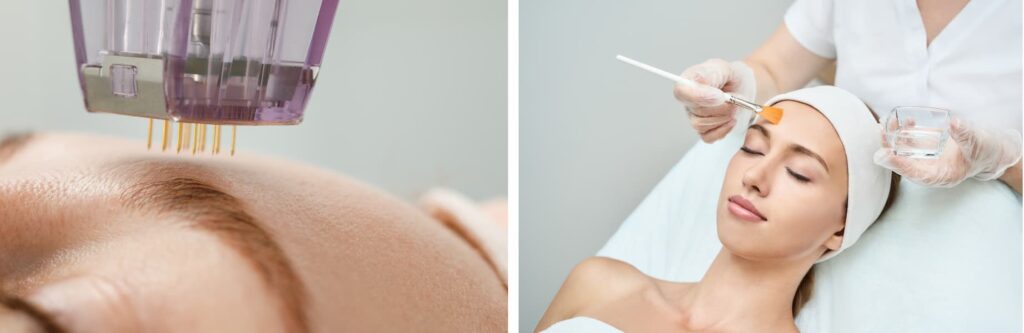
When considering your next skin rejuvenation treatment, you’ve likely come across the debate of microneedling vs chemical peels. Both treatments offer powerful benefits for improving skin texture, tone, and overall appearance, but understanding their unique approaches and results is essential for making the right choice for your skin. At Skin Social in Sandy Springs, GA, we help our clients navigate these options with personalized, science-based recommendations that align with their aesthetic goals and lifestyle needs.
The choice between microneedling vs chemical peels isn’t always straightforward, as each treatment addresses different skin concerns through distinct mechanisms. While both can enhance your skin’s appearance, the depth of treatment, recovery time, and long-term results vary significantly between these two options.
Understanding Microneedling and Its Science-Based Approach
Microneedling works by creating tiny, precise channels in the skin that activate the body’s repair process. This natural response encourages fresh collagen and elastin production, strengthening the skin’s structure and enhancing its smoothness and youthful look.
At Skin Social, we offer both traditional microneedling and RF microneedling. Traditional microneedling stimulates collagen through controlled micro-injuries on the skin’s surface, while RF microneedling takes the treatment a step further by combining the technique with radiofrequency energy. This advanced approach delivers heat deep into the dermis while creating microchannels, resulting in enhanced collagen stimulation and more dramatic skin tightening effects. The radiofrequency targets deeper layers of skin, making it especially effective for addressing skin laxity, fine lines, and textural irregularities.
As your skin repairs these microscopic punctures, it builds new tissue with improved texture and increased collagen density. Results develop over several months as your skin continues its natural renewal process, with improvements in firmness, smoothness, and overall skin quality becoming more apparent.
How Chemical Peels Transform Your Skin
Chemical peels take a different approach to skin rejuvenation by using specially formulated acids to remove damaged skin layers and reveal healthier skin beneath. These treatments work through controlled exfoliation, dissolving the bonds between dead skin cells and encouraging cellular turnover.
The depth and intensity of chemical peels vary based on the specific acids used and their concentrations. At Skin Social, we customize chemical peel treatments based on your specific skin type, concerns, and tolerance levels. Beyond facial applications, we also utilize chemical peels to treat acne on the back and address ingrown hairs in the bikini area, demonstrating their versatility for various skin concerns across different body areas.
The chemical peel process involves applying the solution to clean skin, where it works to break down damaged tissue and stimulate new cell production. As the treated skin naturally sheds over the following days or weeks, it reveals a more even-toned skin with improved texture and reduced signs of aging or environmental damage.
Key Differences in Treatment Mechanisms and Results
When comparing microneedling vs chemical peels, there are a few differences to consider.
Microneedling vs chemical peels differ in how they renew skin:
- Microneedling stimulates natural healing from within.
- Chemical peels resurface by removing damaged outer layers.
Microneedling benefits:
- Targets fine lines, mild laxity, enlarged pores, and acne scars.
- Boosts collagen for firmer, longer-lasting results.
- Improvements build gradually, peaking 3–6 months post-treatment.
Chemical peel benefits:
- Addresses hyperpigmentation, sun damage, uneven tone, and texture.
Delivers brighter, smoother skin within days. - Often requires multiple sessions for deeper issues.
Depth of action:
- Microneedling can reach deeper dermis (especially with RF).
- Chemical peels mainly affect the epidermis and upper dermis.
Comprehensive Benefits of Microneedling for Skin Renewal
At Skin Social, we offer both traditional microneedling with the Collagen Pin and advanced RF microneedling with the Agnes RF device, giving clients options tailored to their unique needs. Traditional microneedling effectively reduces fine lines, acne scars, enlarged pores, and uneven tone — it can even be enhanced with PRP or Exosome Therapy for accelerated healing and rejuvenation. RF microneedling takes results even further by combining micro-injuries with radiofrequency energy to stimulate deep collagen remodeling, tighten skin, and improve mild to moderate laxity around the jawline, neck, and under-eyes. Both treatments are safe for all skin types and tones, with minimal downtime and long-lasting improvements that build over time.
When comparing microneedling vs chemical peels, microneedling works from within to strengthen and repair skin structure, while peels focus more on surface-level renewal. This makes microneedling an excellent choice for those seeking long-term skin rejuvenation.
Targeted Benefits of Chemical Peels for Specific Concerns
Chemical peels are highly effective for pigmentation issues such as sun spots, melasma, acne scars, and post-inflammatory discoloration. By exfoliating damaged surface layers, they even skin tone, brighten dull complexions, and improve overall texture.
Peels can also help with active acne by unclogging pores, reducing bacteria, and preventing new breakouts, making them especially useful for larger areas like the back. In addition, their exfoliating action benefits ingrown hairs, particularly in the bikini area, by keeping pores clear and reducing irritation.
Choosing the Right Treatment for Your Skin Goals and Lifestyle
The decision between microneedling vs chemical peels should be based on your specific skin concerns, goals, and lifestyle considerations. During consultations at Skin Social, our expert team evaluates these factors to recommend the most appropriate treatment approach.
Consider microneedling if you’re primarily concerned with skin firmness, fine lines, acne scarring, or overall skin quality improvement. It’s a great choice for clients who want long-term results and prefer treatments that work with their body’s natural processes. The minimal downtime makes it perfect for busy professionals who need to maintain their regular routines.
Chemical peels may be more appropriate if your main concerns involve pigmentation issues, sun damage, or surface textural problems. They’re ideal for clients who want more immediate visible results and those dealing with specific concerns like active acne or significant hyperpigmentation.
Many clients benefit from combining both treatments as part of an overall skincare strategy instead of trying to settle the debate of microneedling vs chemical peels. This approach allows us to address multiple concerns while maximizing overall skin improvement. The timing and sequencing of combined treatments require careful planning to ensure optimal results and minimize any potential complications.
Frequently Asked Questions
What’s the difference between microneedling and chemical peels?
The biggest difference is their mechanisms of action. Microneedling creates controlled micro-injuries to stimulate collagen production from within, while chemical peels use acids to remove damaged surface layers. Microneedling is better for structural concerns like fine lines and scarring, while chemical peels excel at addressing pigmentation and surface texture issues.
Which treatment is better for acne scars, microneedling or chemical peels?
RF microneedling is generally more effective for acne scars, particularly deeper, pitted scars. The treatment’s ability to stimulate collagen production helps remodel scar tissue and improve skin texture. Chemical peels can help with mild acne scarring and post-inflammatory hyperpigmentation, but may not be as effective for deeper damage.
How do microneedling and chemical peels compare in terms of recovery time?
Microneedling typically causes 1-3 days of mild redness and possible swelling. Chemical peels may result in peeling and flaking for 3-7 days, depending on the depth of the peel. Most clients can return to normal activities within a few days of either treatment.
What skin concerns can be treated with microneedling vs. chemical peels?
Microneedling addresses fine lines, skin laxity, enlarged pores, acne scars, and overall skin texture. Chemical peels are excellent for hyperpigmentation, sun damage, melasma, active acne, rough texture, and dullness. At Skin Social, we also use chemical peels for back acne and bikini area ingrown hair treatment.
Can microneedling and chemical peels be combined for better results?
Yes, combining treatments can provide comprehensive skin improvement by addressing multiple concerns simultaneously. We typically space these treatments appropriately and may alternate them as part of a long-term skincare strategy tailored to your specific needs and goals.
Discover the Right Treatment for You
At Skin Social in Sandy Springs, GA, we provide personalized consultations to help you choose between microneedling vs chemical peels based on your individual skin concerns and aesthetic objectives. Our science-based approach ensures you receive the most effective treatment for lasting, natural-looking results. Schedule a consultation today to experience a radiant glow from our skincare treatments.